The kindergarten to grade 5 math curriculum · iPhone & iPad

A ten-minute-a-day math tutor.

Cardinal Math teaches math as your child plays. It understands how they answer, and picks the next problem to challenge them. The whole curriculum, kindergarten to grade 5, Ontario and Common Core.

Ten minutes, when you have them.
  • In four subway stops.
  • Before the appetizer arrives.
  • In the supermarket queue.
  • At half-time.
  • While the pasta cooks.

A ten-minute math tutor…

…that knows where your child is.

The ideal challenge level.

Children learn best when a problem is just challenging enough. We aim for that zone. Every problem is picked from what your child has shown they can do, never from their age or the textbook’s chapter order. The curriculum sets what there is to learn; your child sets the order.
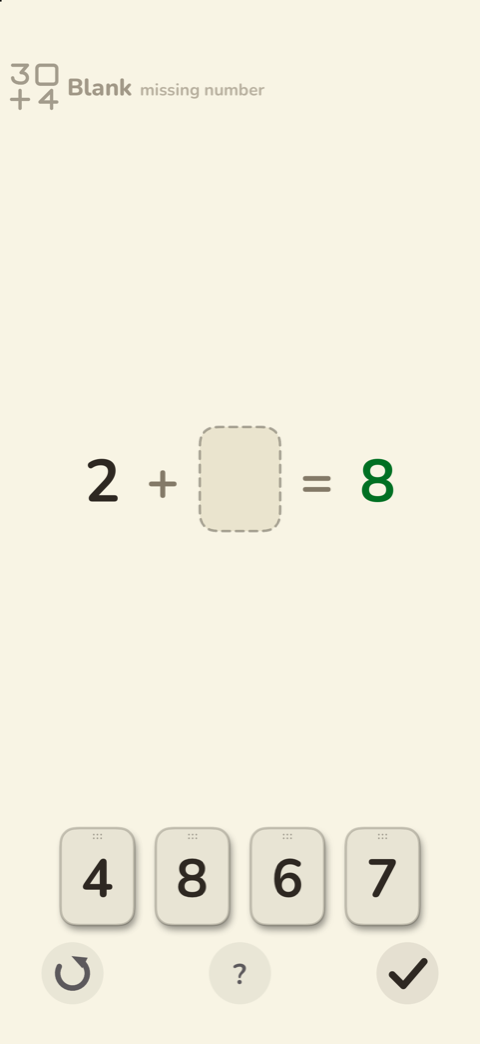
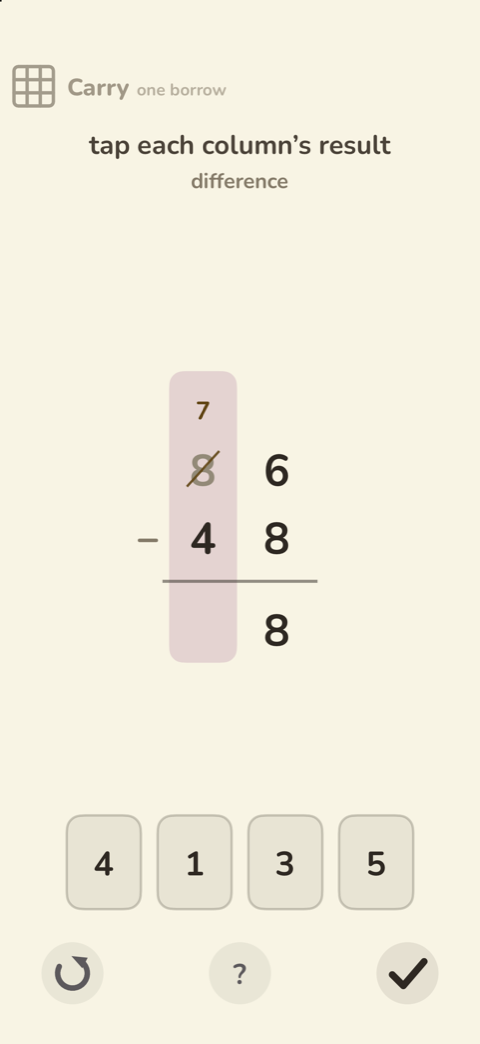
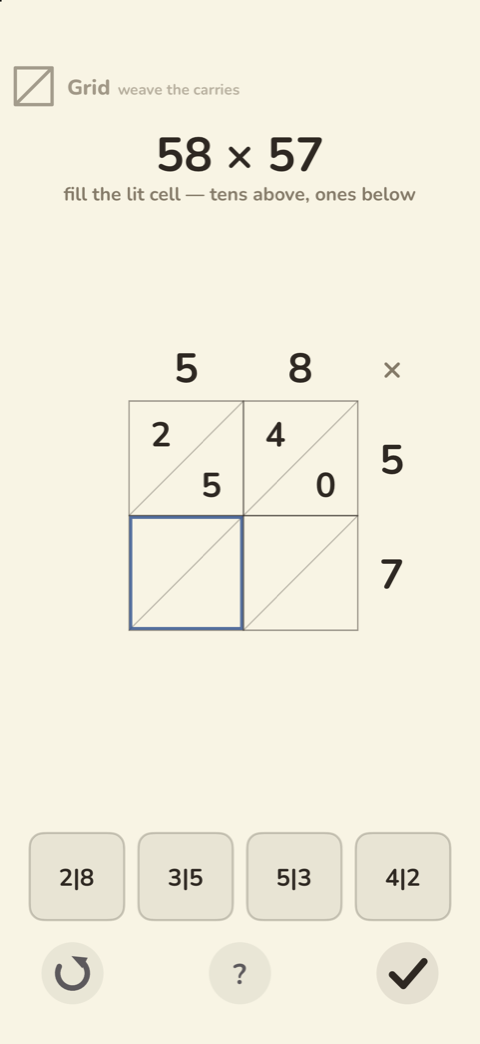
A missing number: 2 + ␣ = 8, four cards to choose from. Column subtraction, 86 − 48: the ones column done, the borrow written in. Lattice multiplication, 58 × 57, two of the four cells filled.

Finds the hole, fixes the hole.

Missed a unit of last year’s curriculum, and it’s showing up now? Wrong answers have reasons. Researchers have catalogued the rules kids reach for that almost work, like “take the small digit from the big one,” and Cardinal Math recognises nearly 100 of them in play. Because it sees how the problem was worked, not just the answer, it can name the rule, step back to the one idea underneath it, show where the rule breaks, and come back. Nothing else is repeated.

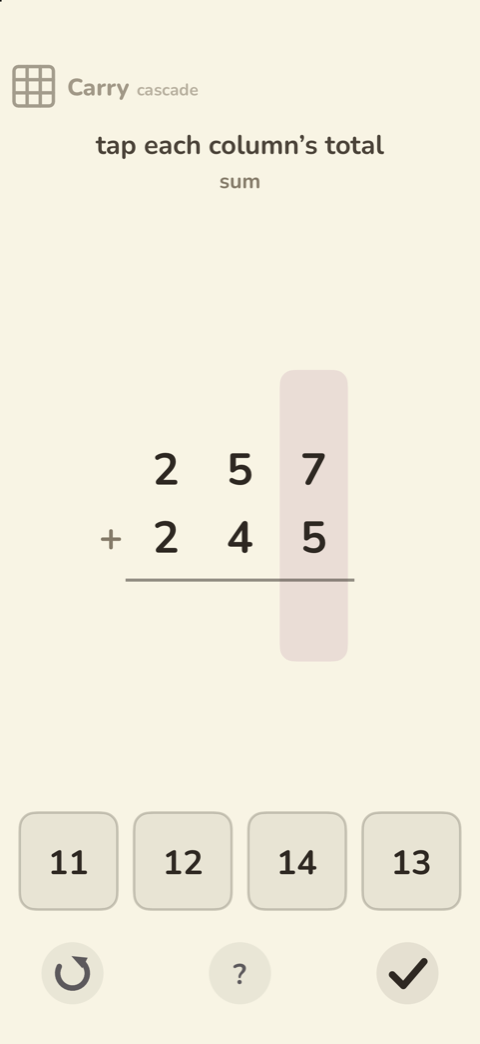
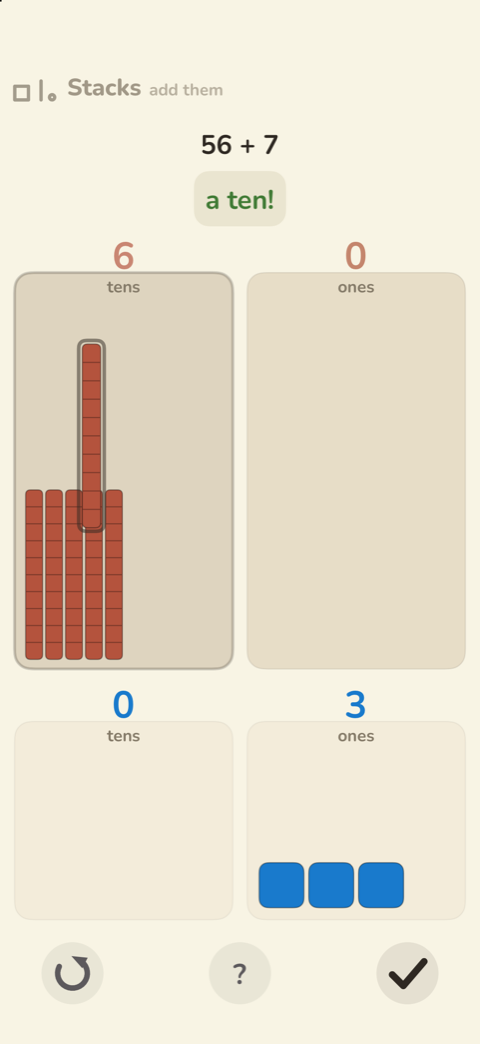
Column addition, 257 + 245, where one carry causes the next. Stacks, 56 + 7: ten ones bundle into a ten, the idea under the carry.

A little every day.

Everyone learns best by doing a little, often. Practise for ten minutes a day. Miss a few days? Pick up where you left off. There is no streak to lose.

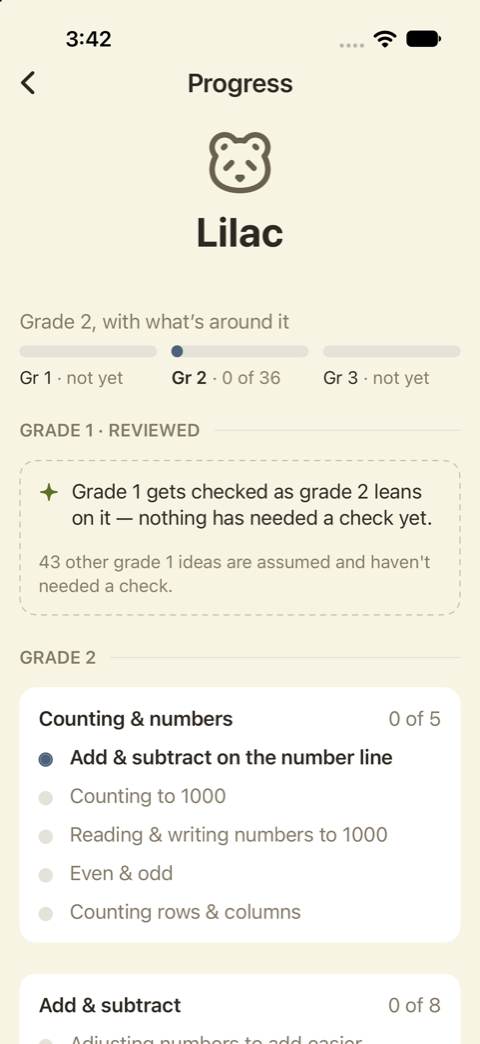
The progress page: what came up this week, and what held. The parent page: the last few days, and what each one covered.

A ten-minute math tutor…

…that teaches, not just tests.

Every animation teaches something.

When a shape folds, you watch it fold along its line of symmetry. When ten ones bundle into a ten, you see them bundle. When pictures dissolve into a number sentence, that’s the lesson: the symbols were the pictures all along. Each activity is built to be reactive and interesting, and the movement is there to show how things work. The good feeling comes from getting it.

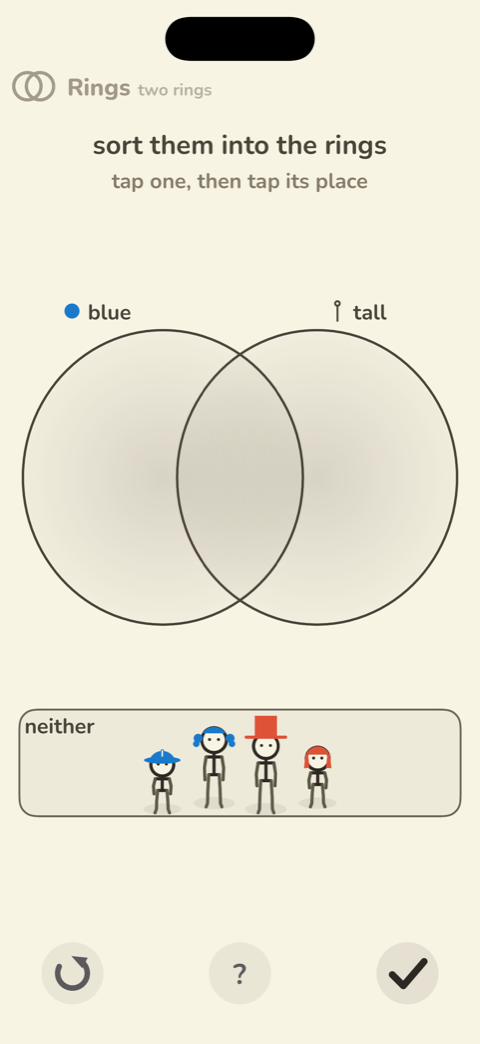
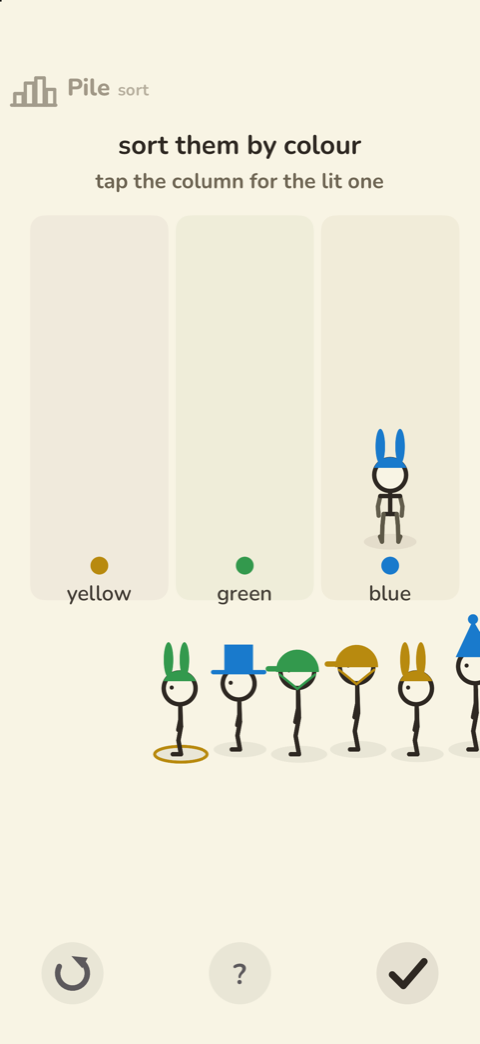
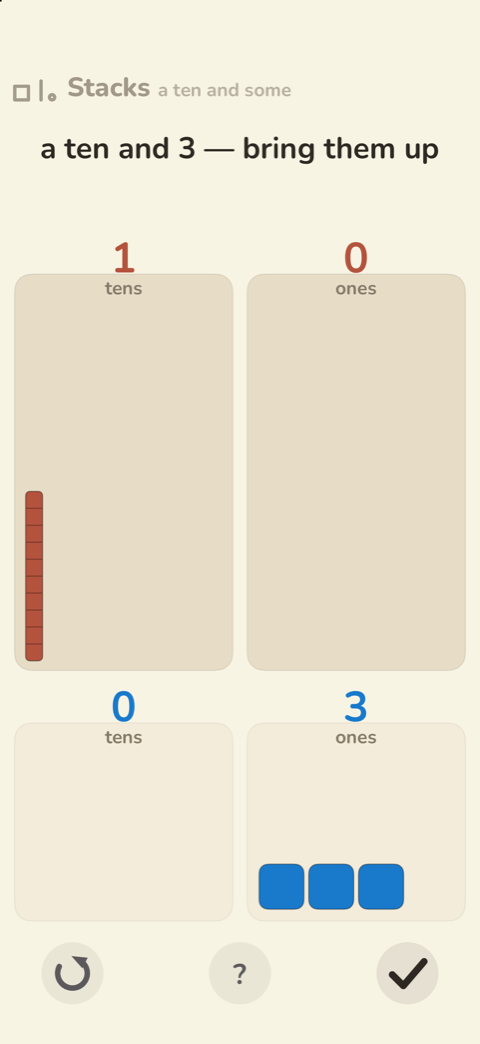
Sorting shapes into overlapping rings. A pile of counters to sort by colour. Stacks: a ten and three ones, to bring up into the columns.

Variety, on purpose.

Doing the same thing over and over gets boring. Each important idea comes in several question styles, and every skill has its own problem maker: problems are made fresh, not drawn from a bank, so every variation of a skill gets its turn. 100 hands-on activities across the kindergarten to grade 5 curriculum, with over 700 levels between them.

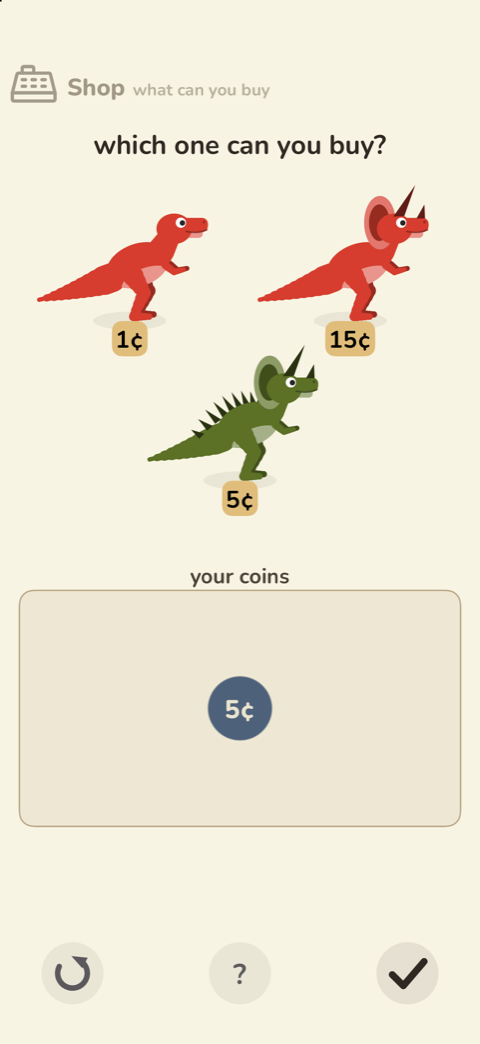
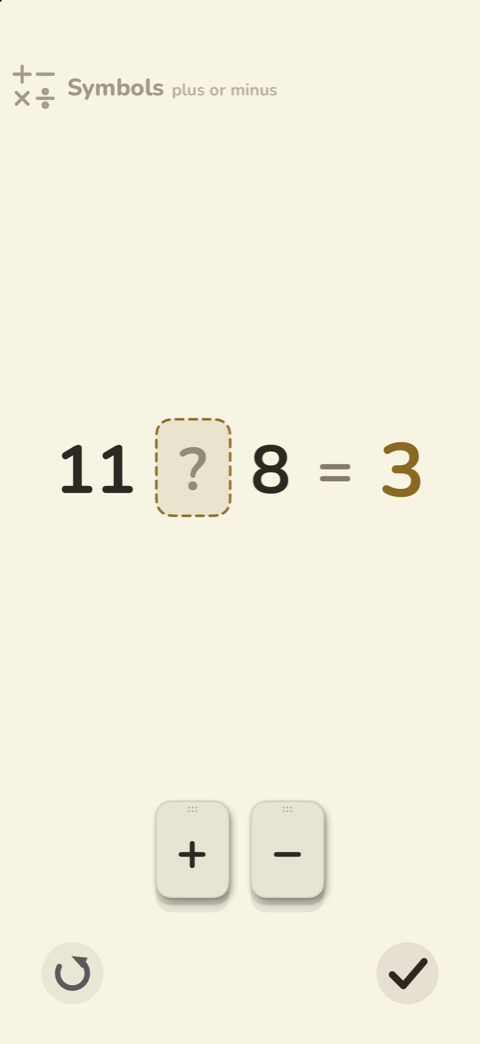
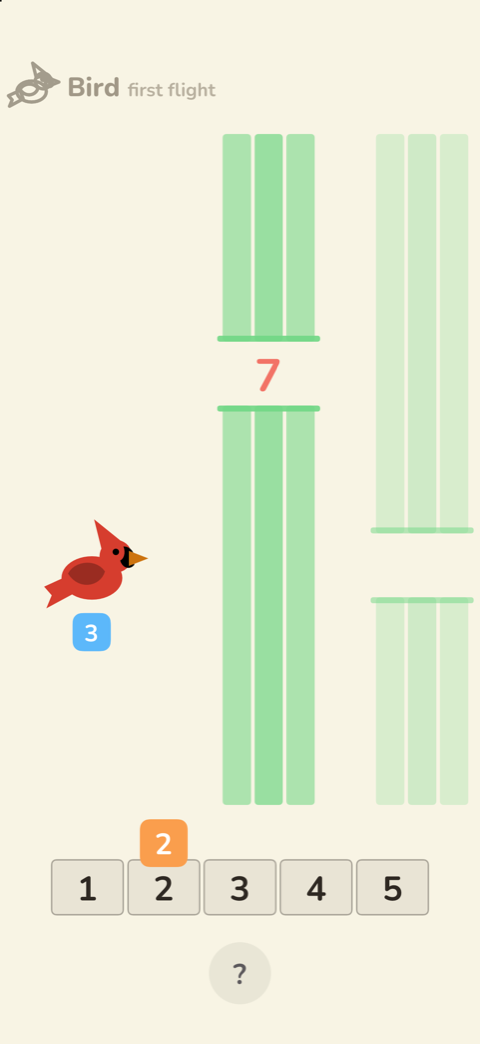
A shop: pay for the items with the coins you have. Symbols: 11 ? 8 = 3, choose plus or minus. Bird: the bird is at 3, the gap is at 7, pick how far to fly.

Fluency, kept separate.

Later grades lean on some facts being fast: 6 × 7 has to be natural and easy before long multiplication can. The research on this is clear, and we drill rules and facts until its natural.

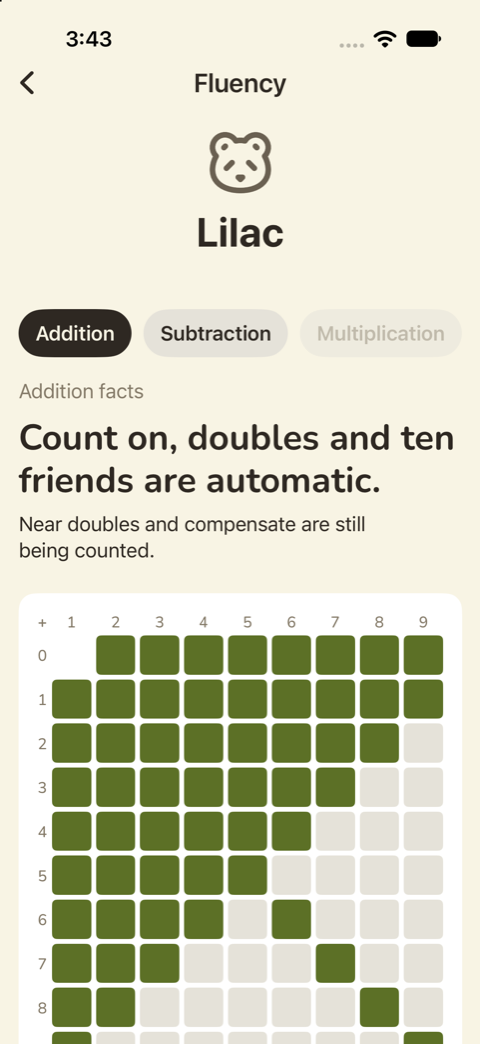
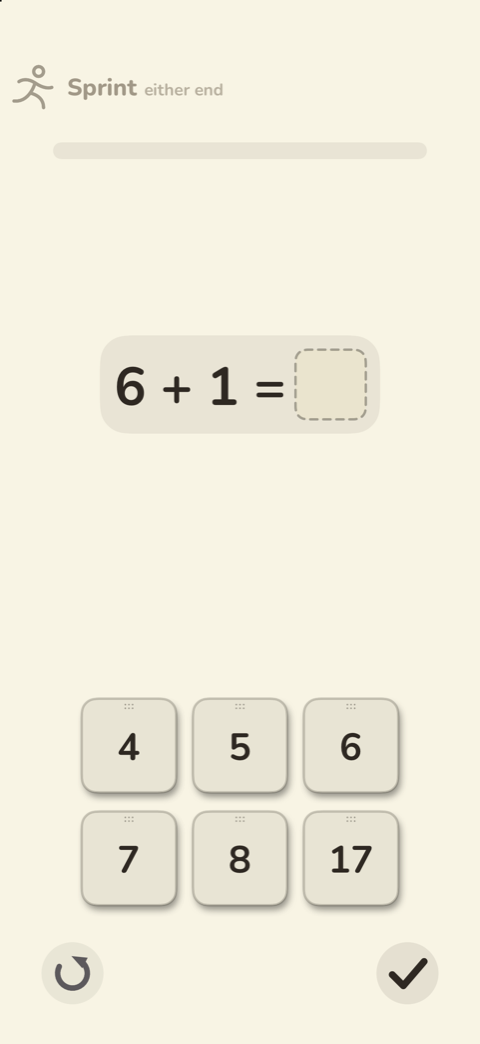
The fluency grid: every fact, shaded by how fast it comes. Sprint: a fact card, 6 + 1, and six doors to tap.

Free mode.

The whole library is open. Revisit a favourite, or jump ahead and try a level the tutor hasn’t served yet. Progress there counts too.

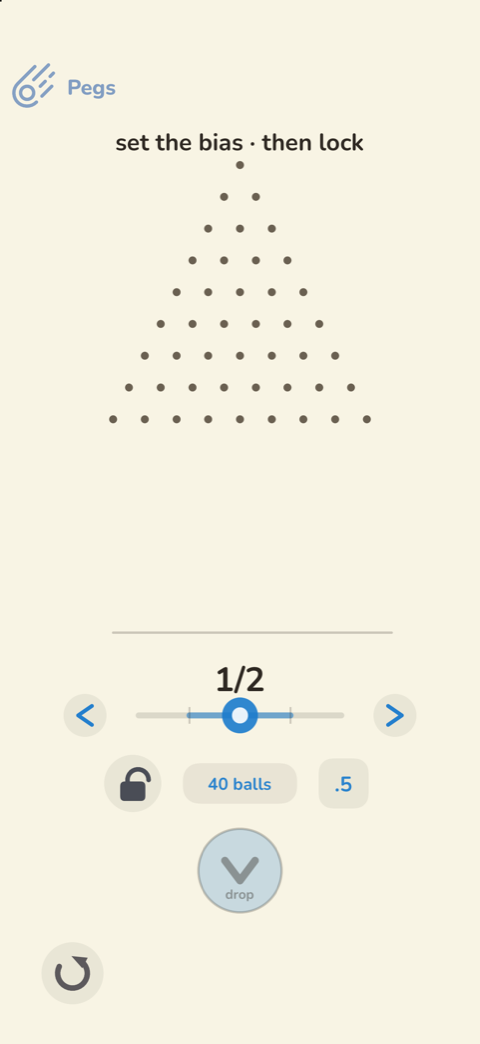
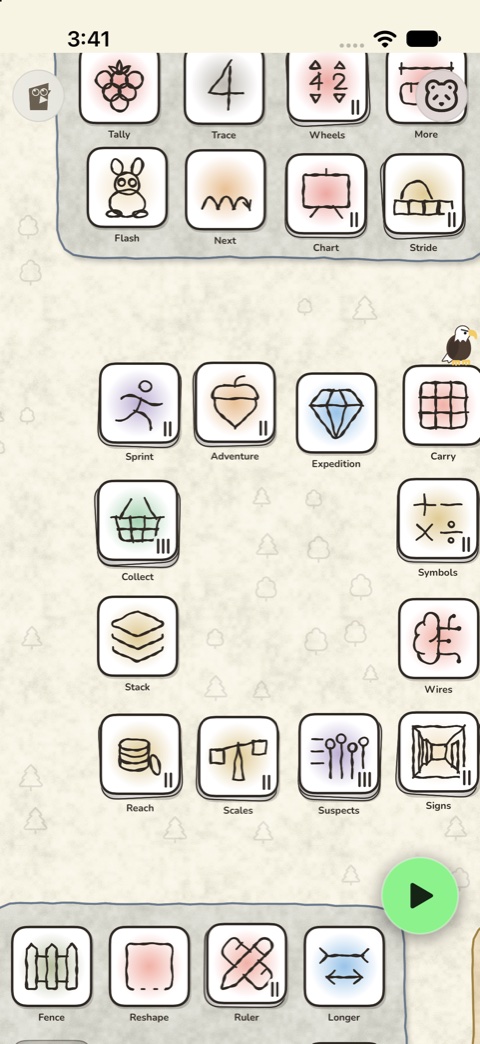
Pegs: set the bias on a board of pins, then drop forty balls. The home map; any tile opens from here.

A ten-minute math tutor…

…that keeps you in the loop.

Talking math with your child.

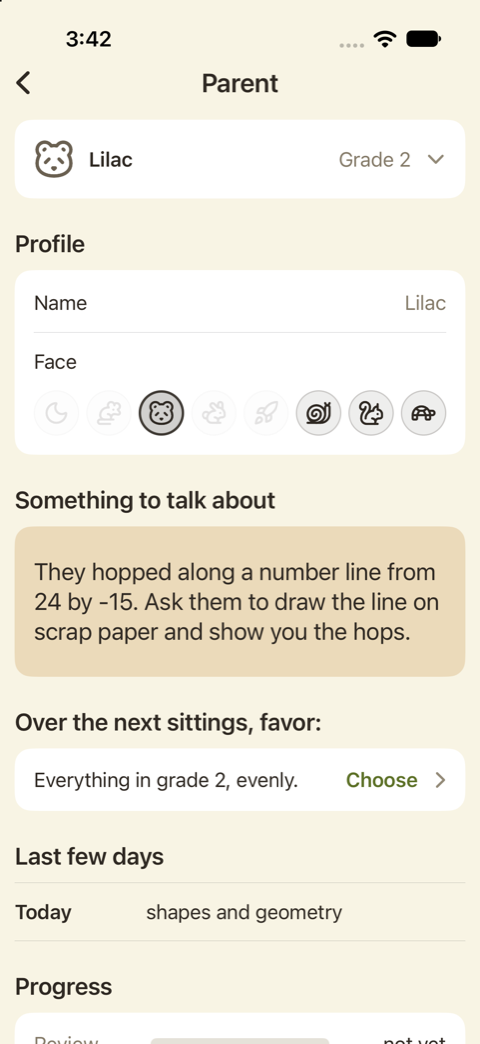
“78% in math” can’t be acted on. The parent page tells you what they’re working on in plain words (“Lately: splitting things into equal parts, and why fourths are smaller than thirds”) and gives you a sentence to spur a conversation at dinner or in the car.

The parent page: what they’re working on, and something to talk about.

The real explanation.

When your child holds onto a rule that used to work, we tell you which one, why kids reach for it, and what replaces it. Everything we tell you is about your child’s own understanding, in words you can use.

The progress page, with the rule that showed up this week named.

Steering.

If the class is on the fractions unit this month, tell the app and it leans that way. Pick the strand of the curriculum to match the classroom syllabus, or your own interest.

The parent page, where the month’s focus is set.

A ten-minute math tutor…

…with nothing to collect.

On purpose, there are no streaks, stars, coins, characters, confetti, unlocks, or grades.

One price, then we’re on the same side.

You pay once. After that, we earn nothing more by keeping your child on the screen, and nothing by showing them ads.

When they’ve learned it, we move on.

We aren’t trying to stretch the curriculum across a school year. Once your child has shown they own an idea, it drops back to an occasional check-in and something new takes its place.

No fireworks for showing up.

No cartoon world to get through first, and no confetti for a correct tap. Your child earns math.

Built for my own kids first.

I’m a parent, and I built this because I wanted it for my children. Every tile has been played at my kitchen table and argued over by my kids. If it didn’t work for them, it didn’t ship.

By the numbers

Mapped to the Ontario and Common Core curricula, kindergarten to grade 5. A profile for each child in the family. Everything runs on the device. Built for all phones, older phones and up. Android available soon.

Research backed

We took the science and put it all in one place.

Try it today

These work now

Stacks

One of the games, playable in your browser. Hundreds, tens and ones in their columns. Kindergarten to grade 4.

Play the tile

The five-minute check

Hand your child the phone. The check watches how they work, names the pattern behind the misses, and stops by itself.

Run the check

The guides

The method today’s curriculum teaches, in words you can say at the table.

Read a guide

A worksheet

New every day, with a key that names the mistake behind a wrong answer.

Print one

All the tiles, by grade.

A ten-minute-a-day math tutor.

The whole kindergarten to grade 5 curriculum, for families who want the learning without the hooks. Coming to iPhone and iPad.

Tell me when it’s out